
| Jhalana | Amagarh Safari Tariff | |
|---|---|
| Price (Indian) | INR. 1500 per passenger / 9000 Full Gypsy |
| Price (Foreigner) | INR.2500 per passenger / 15000 Full Gypsy |
| Safari Zone | All Zones |
| Safari Timing | Morning 05:30 AM – 08:00AM | Evening 04:30 PM – 07:00 PM (Safari Timing Varies as Season Changes) |
| The Price Includes | Jeep & Driver, Permit Charges, Guide Charges, Online Payment Gateway Charges & Our Service Charges and Taxes. |
| Note | Jeep Safari are non refundable. Safari Booking will be CLOSED after 10:00 PM for Next Day Booking. |
| Maximum 6 Adults and 1 child (5 years Blow) are allowed in 1 Jeep | |
| You have to pay full fees for safari booking in advance. | |
| ID proof is a must for each and every visitor. | |
| Note : If Some Seats In Jeep Safari Remained Un Booked Then All The Other Members Have To Pay For Empty Seats | |
| The visitors are required to report at the boarding place 15 min prior to the scheduled | |
| MONTHS | JHALANA SAFARI TIMINGS: | ||
|---|---|---|---|
| From 1st Aug to 31st Oct | 06:45 am – 09:15 am | 03:45 pm – 06:15 pm | ||
| From 1st Nov to 31st Jan | 07:00 am – 09:30 am | 03:15 pm to 05:45 pm | ||
| From 1st Feb to 31st march | 06:15 am – 08:45 am | 03:45 pm to 06:15 pm | ||
| From 1st April to 31st May | 05:45 am – 08:15 am | 04:15 pm to 06:45 pm | ||
| From 1st May to 31st July | 05:45 am – 08:15 am | 04:45 pm to 07:15 pm | ||
| Price (Indian) | INR. 1500 per passenger / 9000 Full Gypsy |
| Price (Foreigner) | INR.2500 per passenger / 15000 Full Gypsy |
| Safari Zone | Jhalana | Amagarh |
| The Price Includes | Jeep & Driver, Permit Charges, Guide Charges, Online Payment Gateway Charges & Our Service Charges and Taxes. |
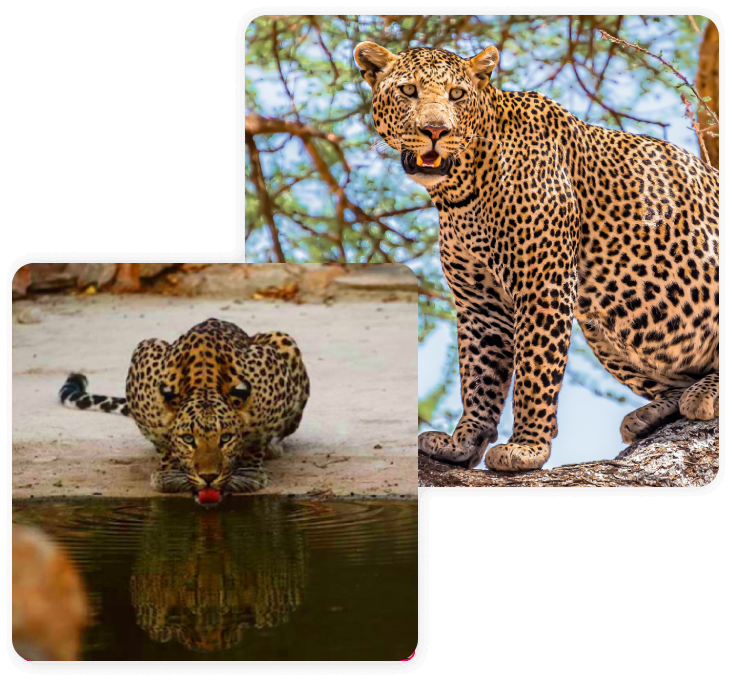
Jhalana, which was formerly a reserve forest near Jaipur, has long been home to leopards as well as a variety of smaller animals, such as spotted deer, blue bulls, wild boars, and several migratory and resident birds. Since December 2016, Safari at Jhalana has been running, and there are currently two safari routes available to guests.
India is a veritable wildlife and adventure paradise due to its immense geographical diversity.Its plains, deserts, mountains, rivers, valleys, tropical rainforests, coastal mangroves, Himalayan foothills, and the snow-covered Upper North are all home to a wide variety of flora and animals.
Furthermore, Jaipur’s fauna is not overlooked. Jhalana region in Jaipur is famed for its leopards.
Jhalana Leopard Safari has developed into a reputable nonprofit wildlife park with a focus on education, conservation, and animals in open areas. Nestled in the scenic slopes of Aravalli, Jhalana Leopard Safari is a true convergence of human and environment, with over 500 animals that represent their wild counterparts. Leopards, jackals, nilgai, hyenas, jungle cats, peacocks, and more can be found there. Jhalana Leopard Safari is more than just a zoo, offering over 400 acres of room for some of the world’s rarest, most endangered, and just plain coolest species to roam.
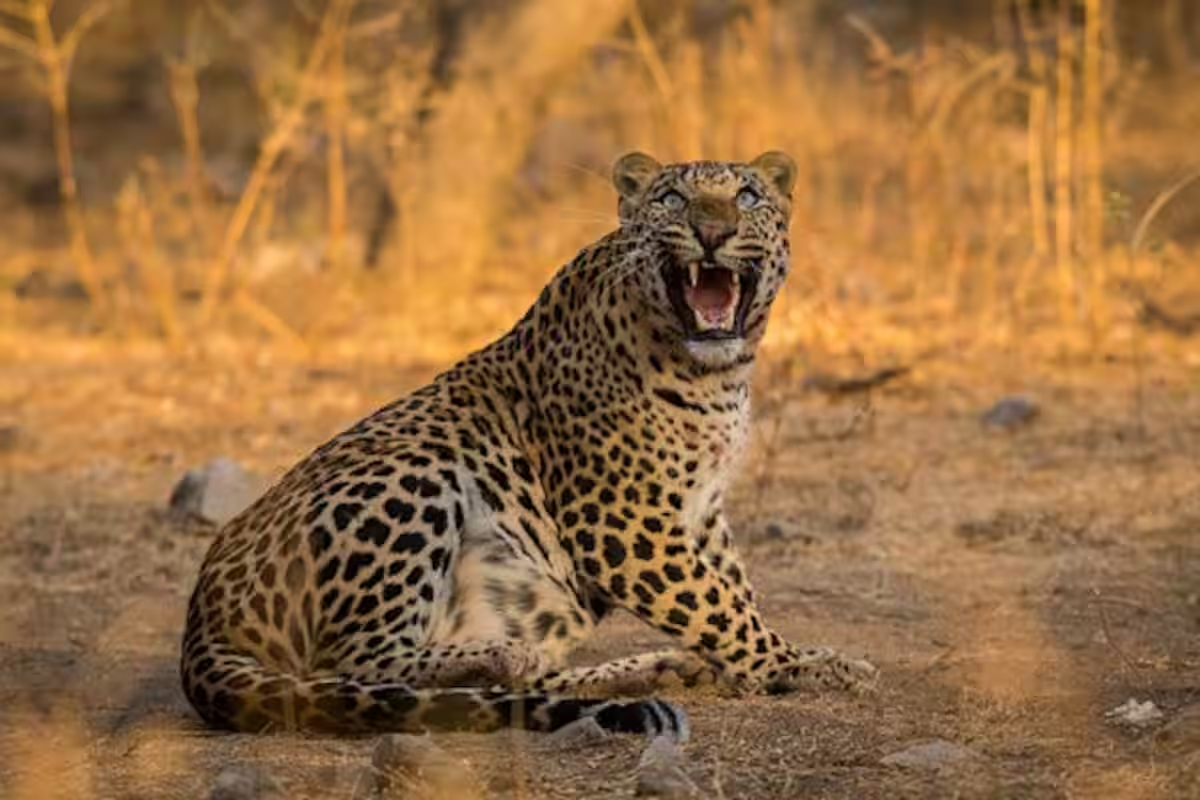
The Jhalana Leopard Safari Park is conveniently accessible by a number of different forms of transportation and is situated in Jaipur, Rajasthan. The following are typical routes to Jhalana Leopard Safari Park:
By Air: The closest airport to Jhalana Leopard Safari Park is Jaipur International Airport (JAI). To get to the safari park after landing at the airport, you can take a cab or utilize other local modes of transportation. Usually, the park is close to the airport.
By Train: Jaipur Junction is the main railway station in Jaipur. From Jaipur Junction, you can hire a taxi, auto-rickshaw, or use other local transportation to reach Jhalana Leopard Safari Park.
By Road: There are frequent bus services from major towns in Rajasthan and nearby states, and Jaipur is well-connected by road. In Jaipur, private cabs and autorickshaws are easily accessible. To get straight to Jhalana Leopard Safari Park, you can rent one.
Self-Drive or Rental Car: If you prefer flexibility in your travel schedule, you can rent a car and drive to Jhalana Leopard Safari Park. Jaipur has well-maintained roads, and the park is easily accessible by car.
Local Transportation in Jaipur: After arriving in Jaipur, you can get to Jhalana Leopard Safari Park using local modes of transportation including taxis and autorickshaws. Using metered taxis or haggling over the fare are both wise choices.
Guided Tours: Jhalana Leopard Safari Park guided tours are provided by a few tour companies and travel agencies. Transportation, safari arrangements, and a guide may be included in these outings.
Jhalana Leopard Safari Park offers a wide range of plants and animals in addition to its well-known leopards. A variety of fauna can be found in the distinctive ecosystem created by the arid environment and rough terrain.
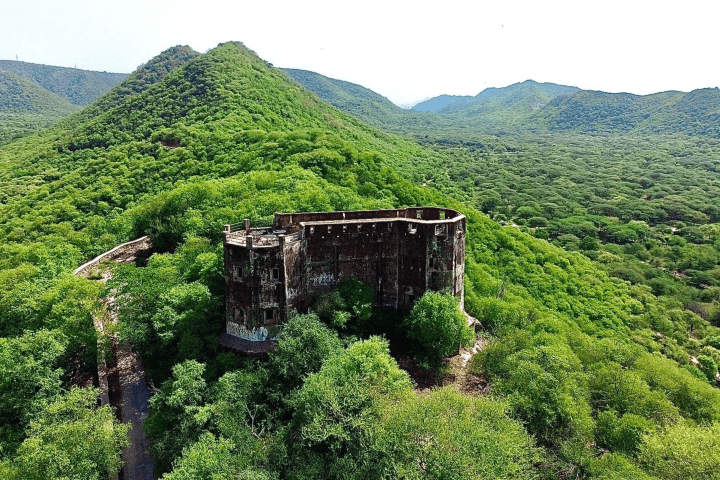
Scrub Vegetation: Scrub vegetation and stony surfaces make up the majority of the park’s topography. The terrain is dominated by hardy plants that have adapted to Rajasthan’s arid climate, tenacious shrubs, and prickly bushes.
Trees and Grasses: Although there is a lot of scrub vegetation, certain places also have sporadic trees and grass patches. These are vital to the park’s ecology because they give herbivores food and cover.
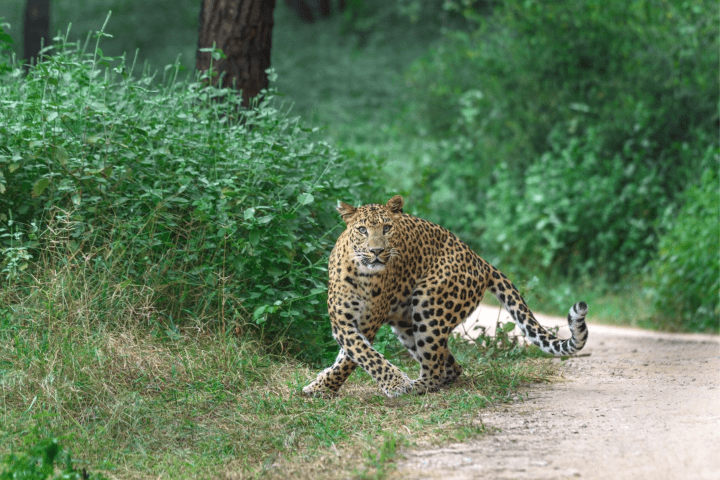
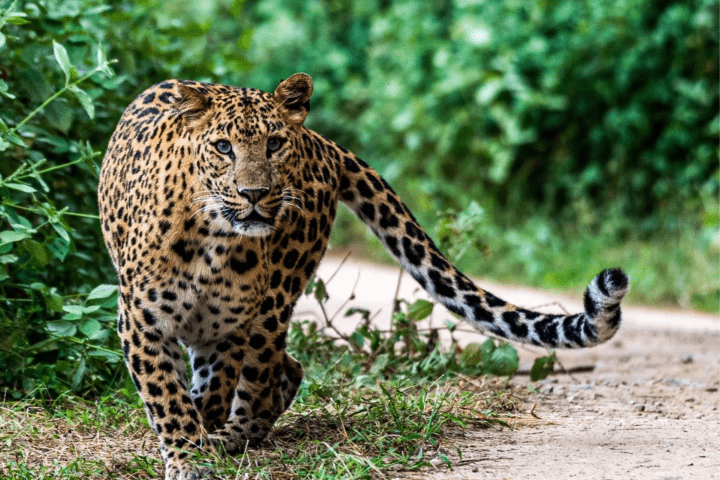
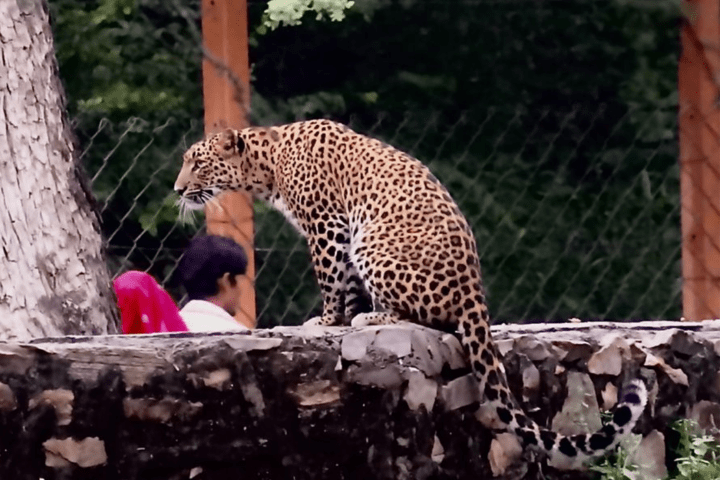
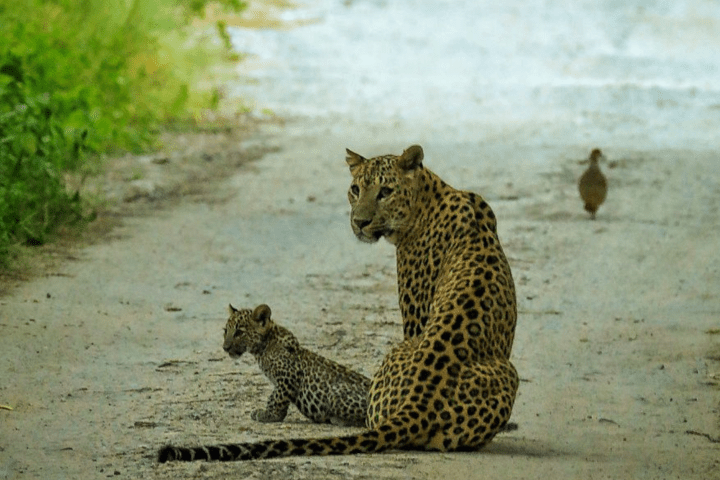
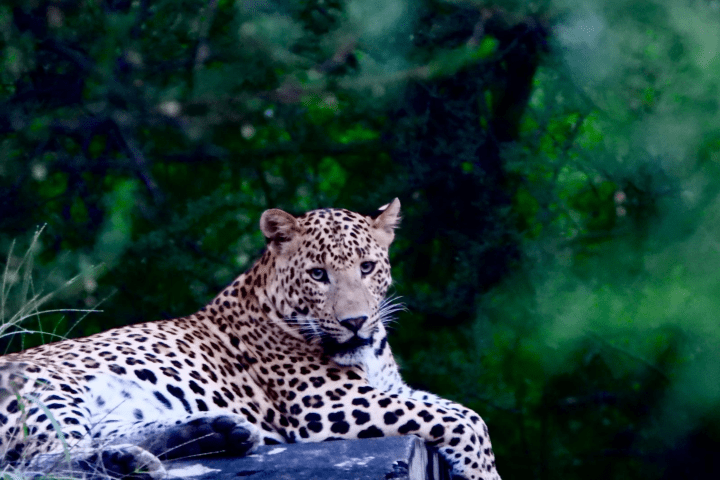
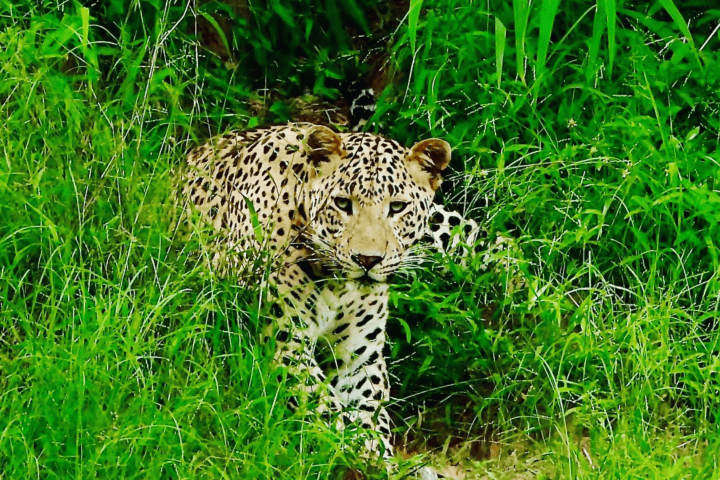
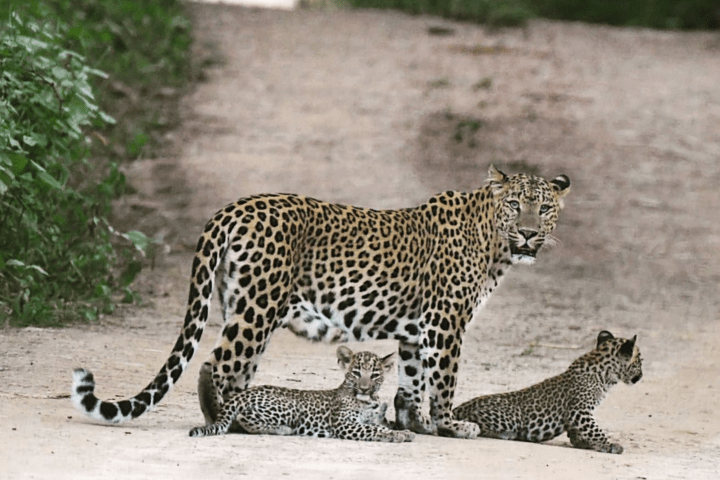
Leopards: Jhalana, which is well-known for having a healthy leopard population, provides a unique chance to witness these secretive animals. Leopards can thrive in the park’s rugged environment.
Blue Bulls (Nilgai): The largest antelope in Asia, the nilgai, or blue bull, is also found in the park. These herbivores can often be seen grazing in the park’s open areas.
Spotted Deer (Chital): The spotted deer, often known as chital, is another prevalent herbivore in Jhalana and a major source of prey for leopards.
Birdlife: Jhalana is a birdwatcher’s paradise, providing opportunities to observe a wide range of bird species, including migratory and resident birds, waterfowl, and raptors.
Reptiles: Jhalana is home to a variety of reptiles, including monitor lizards, snakes, and other lizards.
Weather and wildlife activity both affect the best time to visit Jhalana Leopard Safari Park in Jaipur, Rajasthan. It is crucial to consider the season, animal behavior, and park accessibility in order to maximize the chance of seeing leopards and other wildlife. When organizing your visit, keep the following considerations in mind:
Winter Months (October to March): Winter is the most popular and ideal time of year to visit the park. Safaris are delightful because of the cooler and more comfortable weather. Leopards are more likely to be active in colder climates, and visibility much improves with less dense vegetation. November through February is the best time of year to see wildlife.
Early Morning and Late Afternoon: Early morning or late afternoon are the ideal times to go on a safari, regardless of the season. Leopards and other animals are more likely to be active and easier to spot during these chilly hours. The best lighting for wildlife photography is also available during these times.
Avoid Extreme Summer Months (April to June): Rajasthan experiences hot summers with extremely high temperatures. Wildlife activity slows down during these months, especially during the hottest periods of the day, and it may be more difficult to observe the animals due to the lush foliage. Avoiding travel during the busiest summer months is advised.
Post-Monsoon (July to September): Although the monsoon offers an abundance of flora to the park, safety concerns may cause closures or limited access. Heavy rainfall may result in muddy pathways, making safaris difficult or even dangerous, so it’s better to arrange your visit after the monsoon season has gone.
Stay at Leopard Camps, a magnificent heritage home that provides a window into the past, and revel in Jaipur’s rich history and beauty. Take in the magnificent surroundings of this sumptuous campsite, which offers top-notch amenities, first-rate service, and stunning views of the surrounding hills.
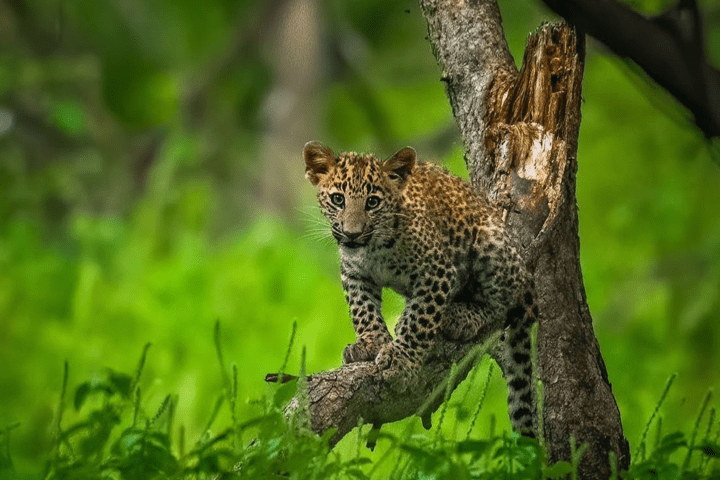
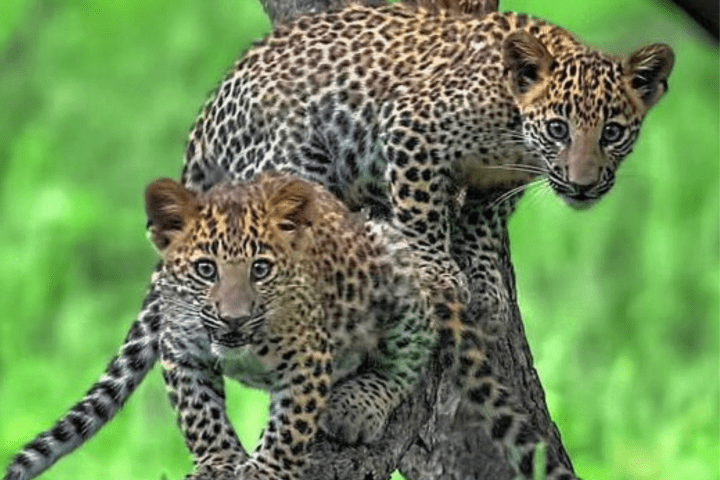
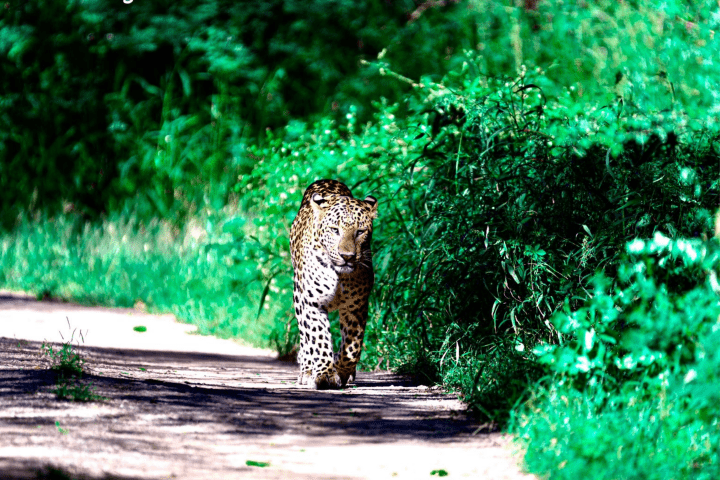
Winter, which runs from October to March, is the ideal time to go. The likelihood of seeing wildlife, particularly leopards, is increased by the pleasant and temperate weather.
The best times to go on safaris are in the early morning and late afternoon. Animals are more active during these cooler hours, and the lighting is ideal for taking pictures.
Yes, it is best to stay away from Rajasthan between April and June because of the uncomfortable high temperatures that can occur there. In the heat of the day, wildlife is typically less active.
Although the monsoon season, which runs from July to September, delivers an abundance of vegetation, excessive rain and muddy trails may cause park closures or restricted access. For a safer safari experience, it is best to go after the monsoon season.
Since leopards are more active throughout the day due to the milder weather, November through February are especially favorable months to see them.
Yes, post-monsoon trips from October forward are safe and delightful, with renewed vegetation and plenty of chances to see wildlife once the monsoon season finishes and the park reopens.
Yes, it is advised to reserve your safari well in advance, particularly during the busiest time of year (October to March), as the park’s popularity can cause spaces to fill up rapidly.
Put on cozy, weather-appropriate attire. Layered clothing is best in the winter because the mornings and nights can be chilly. Wear airy, light clothing during the summer. To fit in with the surroundings, neutral hues like green or khaki are advised.
With the exception of the intense monsoon season (July to September), when the park may close or restrict access owing to inclement weather, safaris are normally offered all year round.
Depending on the time of day and the guide’s itinerary, each safari typically lasts two to three hours. In order to coincide with wildlife activity, safaris are usually planned for early mornings and late afternoons.
The Jhalana Wildlife Safari is one of the most enjoyable activities to do with animals in Jaipur, Rajasthan. This safari is close to the city center and gives people a rare chance to see leopards in the wild and learn about how a natural forest ecosystem works. Jhalana is one of the best places in India to see leopards because there are so a lot of them there. People can also see desert foxes, striped hyenas, blue bulls (nilgai), and a lot of other birds on the safari. On the safari, visitors ride in open gipsy cars, and guides who know a lot about the forest and its animals tell them what they see. The Jhalana Wildlife Safari in Jaipur is great for people who love nature, take pictures, and are interested in animals.
People from all over India and the world come to Jaipur to see the unique wildlife on the Leopard Safari. This safari in the Jhalana Leopard Reserve is one of the best ways to see leopards in the wild. The reserve is a great place for wildlife lovers and photographers because they can see a lot of leopards there. People ride in open gipsy cars through the woods with experienced naturalists who help them find and follow animals. The forest is home to many kinds of birds, as well as leopards, striped hyenas, desert foxes, and jungle cats. A leopard safari in Jaipur is a fun way to learn about how to protect animals while being outside.
Jaipur people love to go on Jhalana Safari, which lets them see the Jhalana Leopard Reserve’s natural beauty. This safari takes people deep into the woods so they can see animals in their natural setting. There are a lot of leopards in Jhalana, so it’s a great place to see them. People ride in open jeeps during the safari, and trained guides tell them about the forest ecosystem and how animals act while they are riding. In addition to birds, visitors can also see nilgai, hyenas, desert foxes, and other animals. Jhalana Safari is a fun way to get away from the busy city of Jaipur and into nature.
The Jhalana Leopard Reserve is a protected forest area in Jaipur, Rajasthan. It’s one of the best places in India to see leopards. Leopards and other animals can live in the reserve because it has dry forests, rocky areas, and rough hills. Jhalana became popular because it has a stable population of leopards, which means that people who go on safari tours are more likely to see these beautiful animals. The reserve is home to a lot of animals, like blue bulls, striped hyenas, desert foxes, and jungle cats. People who like to watch birds can also see a lot of birds that live in the area and birds that come and go. Jhalana Leopard Reserve is important for keeping animals safe and bringing eco-tourists to Jaipur.
The Jhalana Jeep Safari is a fun way to see wildlife in the Jhalana Leopard Reserve forest in Jaipur. The safari takes place in open 4×4 gipsy vehicles that let tourists get close to animals while still being safe. On each jeep safari, there is a trained driver and a knowledgeable forest guide who knows the area and how animals move around. On the safari, you can see leopards, which are common in this reserve. People can also see nilgai, striped hyenas, desert foxes, and lots of other birds. The Jhalana Jeep Safari is a fun way to see the wildlife and natural beauty of Rajasthan.
Online Booking Jhalana Safari is the easiest way for tourists to book a safari in Jaipur’s famous Jhalana Leopard Reserve. With online booking, people can quickly find out if a safari is available, pick the dates and times they want, and confirm their seats from anywhere. This system helps people plan their trips to see animals ahead of time so they don’t get disappointed at the last minute. It’s easy to book online. You usually just have to give some basic information about yourself and your travel plans. Guests can go on a guided jeep safari through the reserve after making a reservation. They will have a good chance of seeing leopards and other animals. Jhalana Safari’s online booking system makes it easy and quick to plan a trip to see wildlife in Jaipur.
Jhalana Leopard Reserve, which is additionally referred to as Jhalana Safari Park, is a popular place to see animals in Jaipur, Rajasthan. There is a lot of dry deciduous forest and rocky land in the park, which is great for leopards and other animals to live in. It’s one of the few urban wildlife reserves in India where people can go on a safari just a few minutes from the city. People visit Jhalana Safari Park to see leopards, and they are more likely to see them there than in other parks. People who come may see more than just leopards. They might also see a lot of birds, as well as desert foxes, jungle cats, and hyenas. The safari routes at Jhalana Safari Park are well-planned, and the guides know a lot about the animals, so it’s a fun and educational place to see them.
You can see the Indian leopard, also known as a panther, at the Jhalana Panther Safari in Jaipur. It’s a fun wildlife activity. There are several number of leopards and other plants and animals in the Jhalana Leopard Reserve, which is a protected forest area. On safari, tourists ride in open jeeps with trained drivers and forest guides who keep an eye on the animals as they move around. Wildlife photographers love this because they want to take great pictures of leopards in their natural habitat. People who come can see more than just panthers. They can also see a lot of birds, nilgai, hyenas, and desert foxes. If you want to see animals in Rajasthan, you have to go on the Jhalana Panther Safari.
A lot of people want to go to the Jhalana Leopard Safari in Rajasthan. Many people visit the Jhalana Leopard Reserve in Jaipur because it is very likely that they will see leopards there. The safari takes place in open gipsy cars that follow set paths through the woods. Experienced forest guides help visitors get around and keep an eye on leopards and other animals as they move around. There are a lot of leopards in the reserve. You can often see them walking through the woods or resting on rocky hills. People can also see hyenas, desert foxes, nilgai, and a lot of birds, in addition to leopards. People who love animals and take pictures will never forget their time on the Jhalana Leopard Safari in Jaipur.
In Jaipur, Rajasthan, Jhalana National Park, also known as the Jhalana Leopard Reserve, is a great place to see animals in their natural habitat. The park is famous for having a lot of leopards, which attracts wildlife lovers and photographers from all over the world. The rocky hills, grasslands, and dry deciduous forests make this a good place for a lot of animals to live. In the morning and evening, people can go on organised jeep safaris to see the park. You can see a lot of different animals, like leopards, nilgai, hyenas, desert foxes, and jungle cats. Jhalana National Park is one of the few places in a big city where you can really get to know wildlife and nature.
Jhalana Safari Booking lets people book their wildlife safari ahead of time so they can be sure to get a seat to see the Jhalana Leopard Reserve. People love to see leopards in this reserve, so safari slots fill up quickly, especially during the tourist season. If you book ahead of time, you can have a stress-free trip and make sure you get to go on one of Jaipur’s most exciting wildlife adventures. Visitors can choose between morning and evening safaris and ride in open-air jeeps with trained guides. When you make a reservation for a safari, you usually have to choose the date, the safari zone, and how many people will be going. To have a great wildlife safari in Jaipur, the first thing you need to do is book a Jhalana Safari.
WhatsApp us